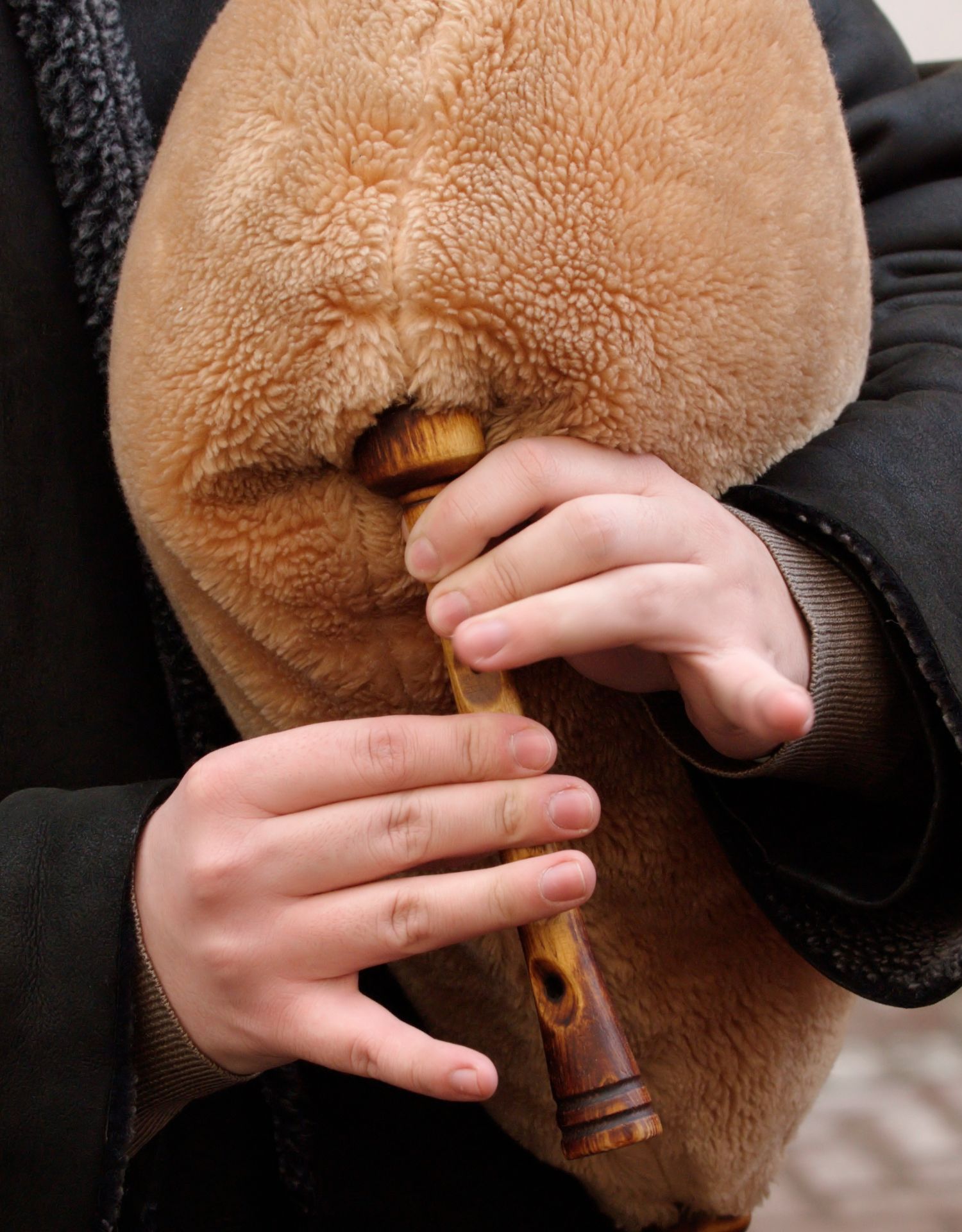
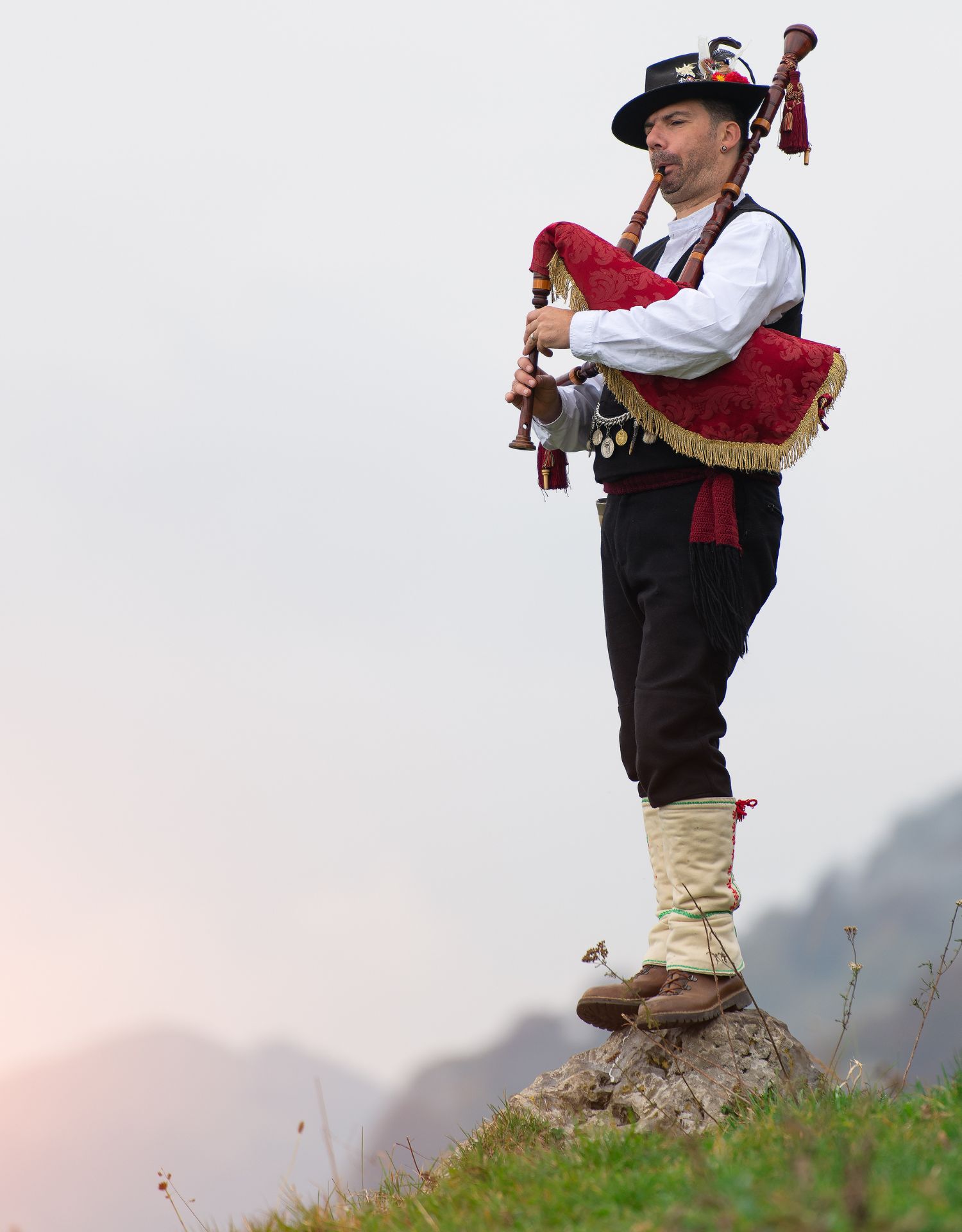
Although many people associate the bagpipe only with Scotland or Galicia, it is actually a very ancient instrument that has existed in many cultures. Its most remote origins are possibly in the Middle East more than 2,000 years ago, and from there it spread to Europe.
Bagpipes likely arrived in the Iberian Peninsula with the Romans or through Arab trade and cultural routes, and were adopted and adapted by different regions, especially in the north.
In Galicia, the bagpipe evolved to become a cultural symbol. Its use is documented since the Middle Ages, playing at festivals, religious processions, and social events. Over time, its construction, technique, and repertoire were perfected. Today, the Galician bagpipe is a Galician national emblem, with world-renowned performers.
Galician Bagpipe vs. Scottish Bagpipe: A Duel of Airs and Tradition
Two worlds, two cultures, one breath. The Galician bagpipe and the Scottish bagpipe (or Great Highland Bagpipe) share a common origin, but have evolved with very distinct personalities, marked by their geography, history, and social uses.
The Galician bagpipe, typical of northwestern Spain, is usually tuned in C or D and emits a warm, melodic, and ornate sound. Its volume is medium-high, perfect for accompanying popular festivals, processions, and traditional celebrations. It generally has one or two roncones (pipes that produce the pedal note), and its playing requires great mastery of tempo: the control of air and constant pressure to achieve a fluid and expressive sound. Its repertoire is rich, full of muiñeiras, alalás, and jotas, with rhythms that invite dancing and reminiscing.
On the other hand, the Scottish bagpipe, famous throughout the world for its imposing presence in ceremonies and military parades, is an instrument designed to dominate open spaces. Its B-flat tuning makes it higher and more powerful, and it features three drones (one bass and two tenors) that create a dense and constant sound base. The melodies are martial, repetitive, and ornamented with gracenotes—grace notes played with almost percussive precision. It is a sound that commands respect and deeply moves.
The chanter also varies: in the Galician bagpipe, it is shorter and thicker, while in the Scottish bagpipe, it is long and slender, adapted to its distinctive playing style.
Beyond the technical and aesthetic differences, both bagpipes are living symbols of their lands. Whether accompanying a Galician pilgrimage among pipers and drummers, or leading a parade in Edinburgh amid drums and kilts, these sister wind instruments remind us that traditional music, far from being a thing of the past, continues to resonate strongly in the present.

 English